
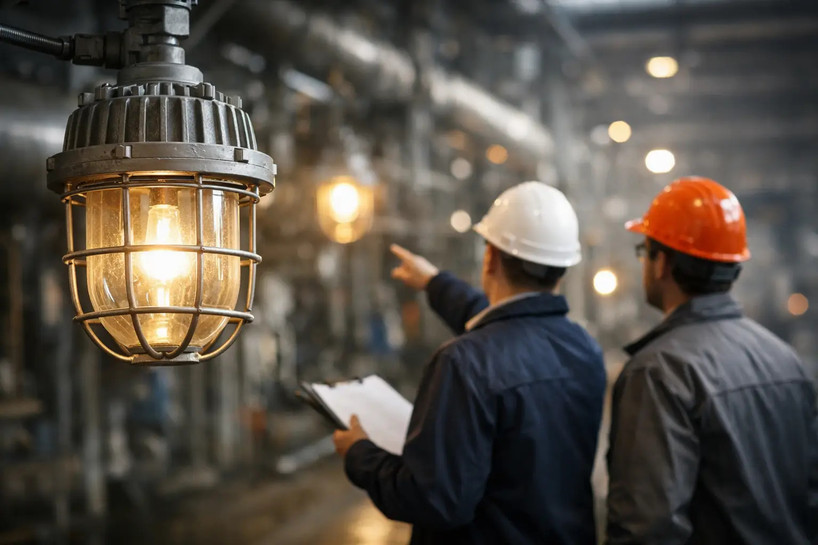
A standard commercial fixture can become an ignition source when flammable vapor, combustible dust, or fibers are present. That is why explosion-proof lighting is selected by hazardous-location classification first, then by light output, mounting, voltage, and operating conditions. A fixture that is bright enough but improperly rated for the area is not a value purchase - it is a safety and compliance problem.
For contractors, facility managers, and purchasing teams, the right approach is to match the fixture's certification markings to the conditions documented for the location. Do not select an industrial-looking fixture based on its housing alone. The nameplate, listing, temperature code, and installation instructions determine whether it belongs in the application.
What Explosion Proof Lighting Actually Means
“Explosion proof” does not mean a light prevents an explosion from occurring. It refers to equipment built so an internal spark or ignition event will not ignite the surrounding hazardous atmosphere. The enclosure is engineered to contain an internal explosion and cool escaping gases through controlled flame paths before they can ignite vapor or gas outside the fixture.
This distinction matters because hazardous-location protection is not one feature. A fixture may need to address flammable gases, combustible dust, corrosive washdown exposure, extreme ambient temperature, or several conditions at once. Its certification must cover the specific hazard.
Most current commercial products use LED light engines. LEDs reduce maintenance demands and can provide long operating life, but they do not eliminate the need for a properly listed enclosure. Drivers, wiring connections, switches, and heat generated by the fixture remain part of the hazardous-location design.
Start With the Hazardous Location Classification
The National Electrical Code classifies hazardous locations by the material present and the likelihood that it will be present. The project documents, facility safety team, engineer, or authority having jurisdiction should identify the required classification. Lighting should be specified to meet that requirement exactly.
Class I: Flammable Gases and Vapors
Class I locations involve flammable gases or vapors, such as those found around fuel handling, solvent storage, paint operations, chemical processing, and some wastewater treatment areas. Divisions identify how likely an ignitable concentration is to exist.
Division 1 generally covers areas where hazardous concentrations may exist during normal operations, frequent maintenance, or equipment failure. Division 2 covers areas where the hazard is not normally present but could occur accidentally, such as from a leak or abnormal operating condition. A Class I Division 1 fixture may be suitable for certain Division 2 conditions, but the fixture's full marking and local requirements still control.
Class II: Combustible Dust
Class II locations involve combustible dust. Grain handling, feed processing, flour mills, woodworking operations, metal dust processes, and some plastic manufacturing environments can fall into this category. Dust can collect on fixture surfaces, so the fixture's maximum surface temperature is especially critical.
A fixture acceptable for flammable vapor is not automatically acceptable for combustible dust. Confirm the Class II Division and applicable dust group markings before ordering. The installation method also matters because dust accumulation, damaged gaskets, and incorrect conduit seals can compromise the intended protection.
Class III: Fibers and Flyings
Class III areas contain easily ignitable fibers or flyings, often associated with textile, woodworking, and similar operations. These materials generally do not remain suspended in the air like gas or fine dust, but they can collect around equipment and create ignition concerns. Use the classification listed for the exact space rather than assuming a general industrial fixture will qualify.
Some facilities use the Zone system for gas and vapor hazards instead of the Class I Division system. Zone 0, Zone 1, and Zone 2 describe the expected frequency and duration of an explosive gas atmosphere. Division and Zone markings are related but are not interchangeable shorthand. Match the product's listed system to the specification and jurisdiction.
Read the Fixture Marking Before Comparing Price
Once the area classification is known, compare products by the markings that prove suitability. The product data sheet should clearly identify the Class, Division or Zone, and Group rating. For gas applications, group markings help define the type of gas or vapor the equipment can handle. For dust applications, the marking identifies the applicable dust group.
Temperature code, often shown as a T-code, is another required check. It indicates the maximum temperature the equipment can reach under rated conditions. That temperature must remain below the ignition temperature of the material present. A higher-output fixture is not always a better choice if its temperature rating does not meet the site's requirement.
Look for a recognized third-party certification listing appropriate to the product and application. UL, ETL, CSA, and other Nationally Recognized Testing Laboratory markings may appear on hazardous-location equipment, but the mark alone is not enough. Review what the product is specifically listed for. A general safety listing does not prove Class I, Class II, Division, or Zone suitability.
Specify Light Output for the Work Being Done
After safety classification, lighting performance determines whether the installation will support safe operations. Start with the task: visual inspection, loading, equipment maintenance, pedestrian movement, process monitoring, or general circulation. Then account for mounting height, layout, reflectance, obstructions, and required foot-candle levels.
Explosion-proof high bays are often used in large industrial interiors with elevated mounting heights. Linear fixtures can fit aisle-oriented layouts, catwalks, and process areas. Wall-mounted fixtures, bulkheads, and flood lights are common around tank farms, exterior process equipment, loading areas, and building perimeters. Hand lamps and portable work lights serve temporary maintenance needs, but their cord, plug, and connection method must also be appropriate for the location.
Do not rely on wattage alone. Compare delivered lumens, distribution pattern, mounting height, and photometric coverage. LED fixtures may offer selectable wattage or color temperature, but any field-adjustable setting must remain within the fixture's hazardous-location listing and installation instructions. For many industrial settings, 4000K or 5000K provides clear task visibility, though color temperature should align with facility standards and the visual demands of the work.
Check Electrical and Environmental Details
Voltage is a frequent ordering error. Confirm whether the site uses 120-277V, 347-480V, 12-24V DC, or another supply. Verify the branch circuit, driver input range, surge protection needs, and whether emergency operation is required. Hazardous-location emergency lighting may require a purpose-built listed solution rather than an aftermarket battery backup arrangement.
Mounting and wiring are equally important. Pendant, ceiling, wall, stanchion, yoke, and junction-box mounting options affect aiming, illumination, clearance, and code compliance. Select the correct hub size, conduit type, gasket, guard, and mounting accessory for the fixture and environment. An approved fixture can be rendered noncompliant by an incorrect field modification or an unsuitable accessory.
Environmental exposure should also shape the purchase. Consider ambient temperature, vibration, salt air, corrosive chemicals, washdown, wind, and physical impact. A marine or chemical environment may require corrosion-resistant materials and hardware. A food or beverage site may need a fixture that also satisfies sanitation or washdown requirements. In hot process areas, confirm the published ambient operating range rather than assuming LED equipment will tolerate any temperature.
Installation and Maintenance Protect the Rating
Explosion-proof lighting depends on correct installation. Follow the manufacturer's instructions for conduit entries, thread engagement, sealing fittings, torque, grounding, and unused hub plugs. Never drill the enclosure, substitute components, defeat a gasket, or open equipment while energized in a hazardous area unless the applicable procedures and conditions allow it.
Maintenance teams should inspect fixtures for cracked lenses, loose covers, corrosion, damaged conduit, missing guards, and dust buildup. Clean lenses with methods approved for the fixture and the facility's safety procedures. When a fixture fails, replace it with equipment carrying the same required hazardous-location rating rather than treating the application as a standard maintenance replacement.
For multi-fixture projects, provide the area classification, mounting height, voltage, target light levels, and environmental conditions before requesting a quote. That information makes it possible to compare the correct explosion-proof lighting options instead of sorting through fixtures that only look similar. The right fixture starts with the rating on the nameplate, then earns its place through dependable light where people need to work.